Seams, curbs and terminations
A TPO or PVC seam, an EPDM splice and a roof-wall termination need different compatible methods. The detail must reconnect to usable surrounding roofing.
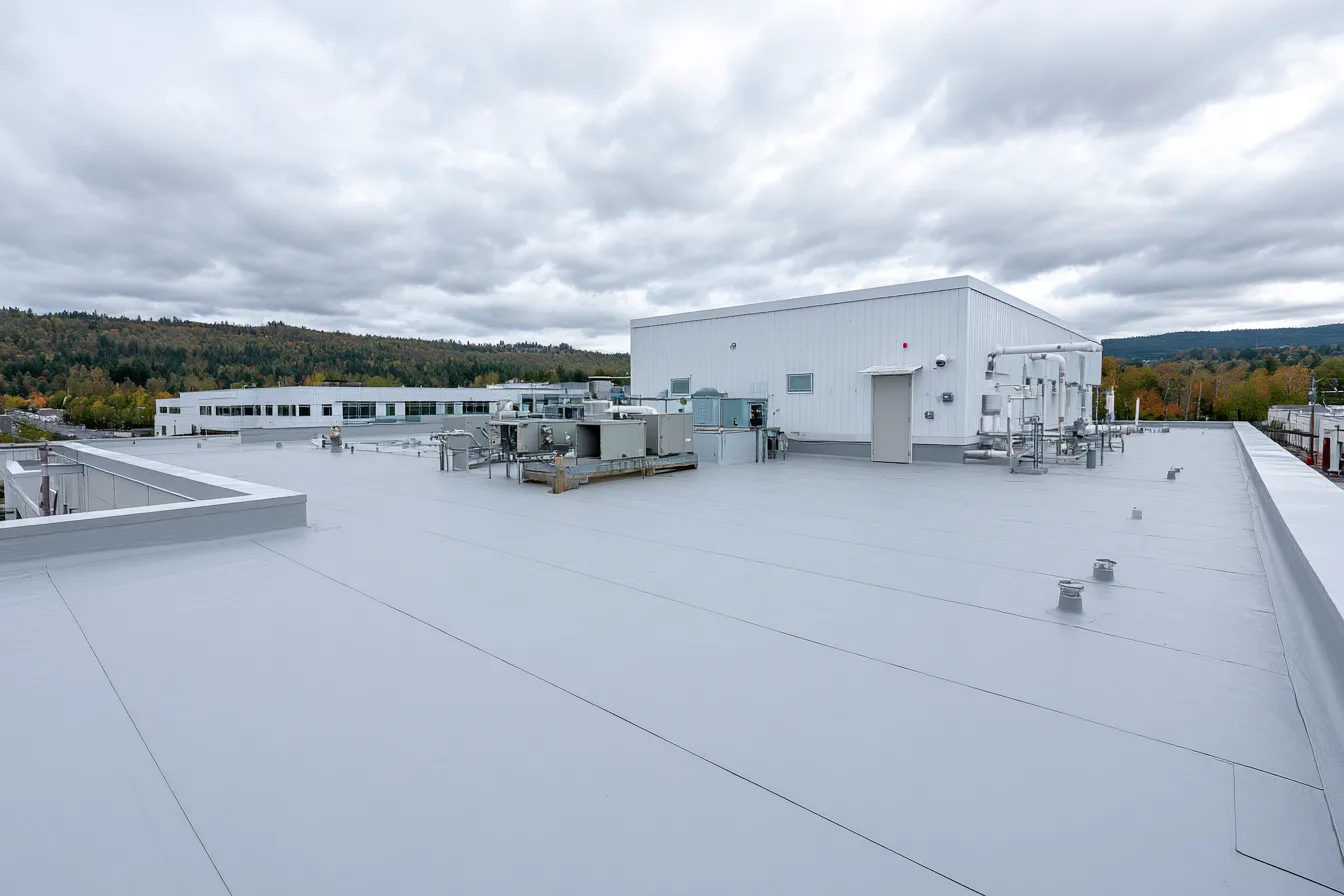
A low-slope roof leak needs the entry, the moisture extent and the surrounding assembly understood. The useful repair can be larger than the visible opening.
Water can enter at an opened seam, a curb flashing, a drain or a perimeter termination. It can also move beneath the membrane before it appears inside. The place where it drips and the failed roof detail are not always directly aligned.
We consider the membrane type, existing repairs, drainage and suspected moisture. A repair needs compatible materials and a defined boundary of sound assembly. Repeatedly sealing the place nearest the indoor leak can miss the actual entry.
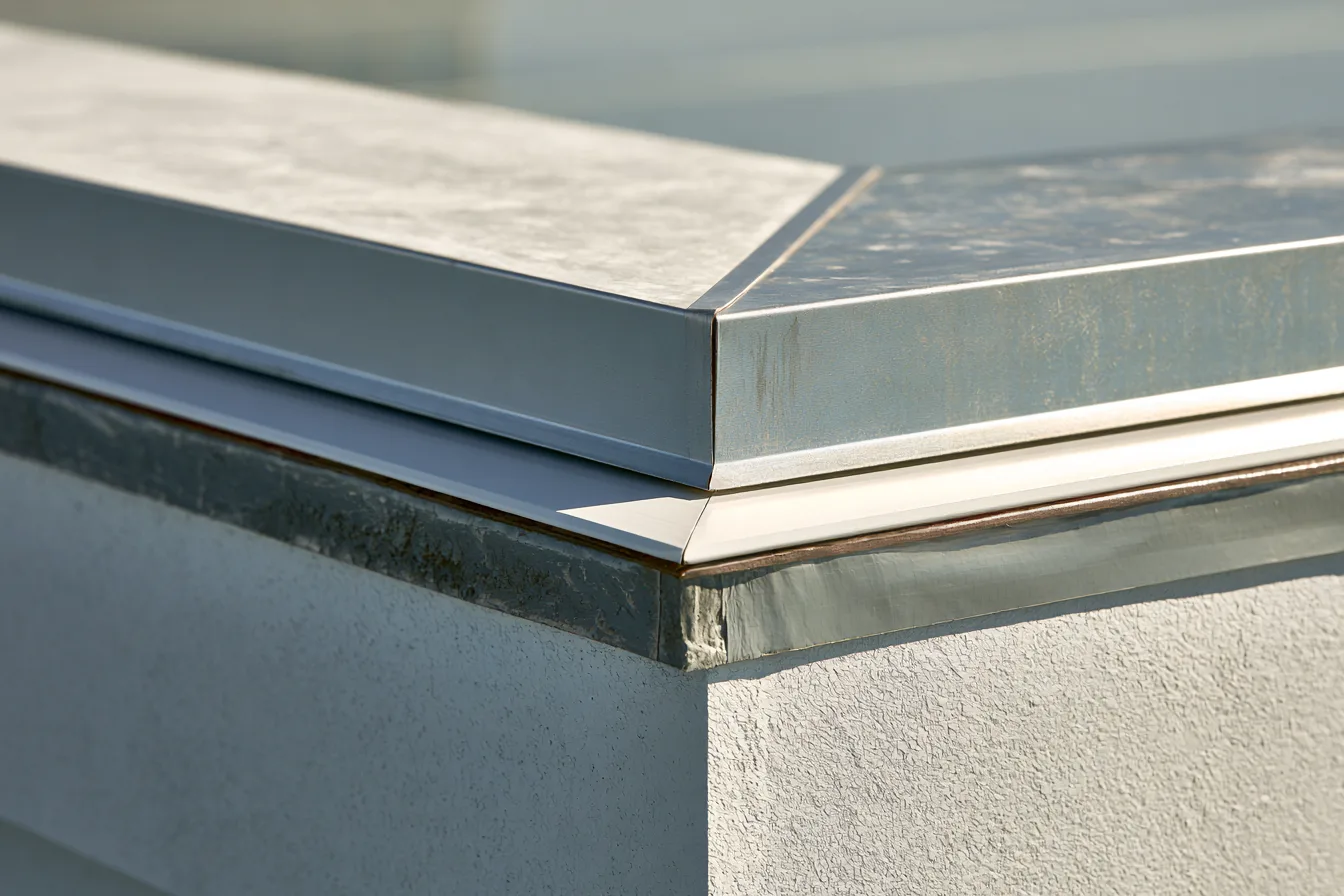
The scope follows the water path and the materials it affected.
A TPO or PVC seam, an EPDM splice and a roof-wall termination need different compatible methods. The detail must reconnect to usable surrounding roofing.
Investigation of suspected wet areas defines how far removal or repair extends. A surface patch does not dry insulation or restore deteriorated support.
Blocked or deficient drainage and changes around rooftop units can leave a repeated source of trouble. The appropriate roof and trade work belong in the scope.
The size of the indoor stain is not a reliable measure of roof scope.
A coating system needs an eligible, prepared roof. Defects, wet insulation and unsound support need to be dealt with first.
The cause and effect need assessment. Drainage obstruction, slope and assembly condition can call for different work. A membrane patch alone does not resolve every drainage problem.
Building use, safe access, tenant routes, equipment and deliveries need to be considered. Actual phasing and schedule are agreed for the project.
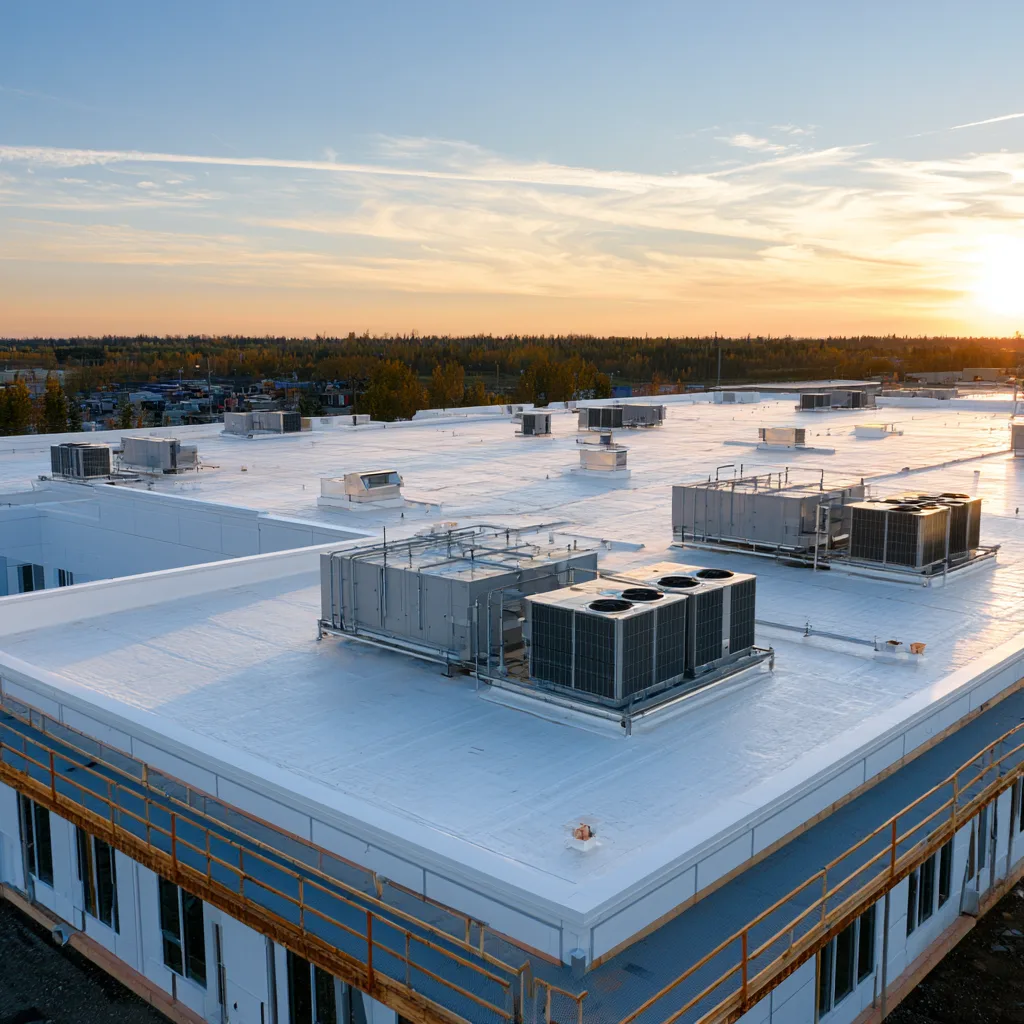
Tell us where the building is and where the leak appears. Include any access, tenant or rooftop equipment concerns.